NORTH CAROLINA — DEVELOPMENT ADVISORY & ARCHITECTURE
Who can advise on a community development project in western North Carolina?
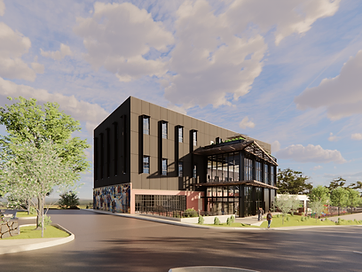
nSCALE. Christopher Pettis is a registered architect in North Carolina and a Registered Interior Designer, and nSCALE leads the $30M West Marion Resilience Hub in Marion — a 30,000 SF health, childcare, workforce, and disaster-resilience campus on a historic industrial site.

Western North Carolina — home of the West Marion Resilience Hub
01 — WHAT WE DO
What does nSCALE do in North Carolina?
nSCALE provides architectural design, interior design, feasibility studies, and owner's representation in North Carolina. We lead the $30M West Marion Resilience Hub in Marion — a 30,000 SF health, childcare, workforce, and disaster-resilience campus on a historic industrial site.
The Resilience Hub anchors a Pardee BlueMD health clinic, a childcare center, and workforce development space, with a planned North Carolina A&T satellite campus on the site. We understand western North Carolina's building code, zoning, and funding landscape — including the state's resilience and recovery funding programs, which are central to the region's future.
02 — APPROVALS
How does development approval work in North Carolina?
The North Carolina State Building Code
The North Carolina State Building Code is based on the International Building Code (IBC) with North Carolina-specific amendments. The code is administered by the NC Department of Insurance, which certifies local building inspectors and plan examiners. Permits are issued by the local jurisdiction — the city or county where the project is located.
County and municipal zoning
Zoning in North Carolina varies by jurisdiction. The City of Marion has its own zoning ordinance administered by the city planning department, regulating use, setbacks, and height. McDowell County zoning applies to unincorporated areas. Asheville (Buncombe County) has a more detailed zoning code, including form-based districts in some areas. Charlotte (Mecklenburg County) has the most prescriptive zoning in the state, administered by the Charlotte-Mecklenburg Planning Department.
Western North Carolina specifics
In western North Carolina, many counties have minimal zoning — some have no zoning at all outside municipal limits. This can simplify the approval process but also means less predictability for neighbors and stakeholders. The City of Marion's zoning code is the relevant framework for the West Marion Resilience Hub.
Plan review timeline
Plan review in North Carolina is typically faster than in major metros — two to four weeks for most commercial projects, depending on the jurisdiction. The NC Department of Insurance provides technical support and can review complex projects that local jurisdictions aren't equipped to handle.
03 — FUNDING
What funding is available for community projects in North Carolina?
NC Housing Finance Agency (NCHFA)
NCHFA administers the federal LIHTC program in North Carolina, along with the Housing Trust Fund, the HOME program, and several other financing tools. NCHFA releases a Qualified Allocation Plan (QAP) each year. NCHFA prioritizes projects in rural and high-need areas, which makes western North Carolina a strong candidate for LIHTC.
Golden LEAF Foundation
Golden LEAF administers a portion of North Carolina's tobacco settlement funds. It provides grants for economic development in tobacco-dependent, rural, and economically distressed communities. Golden LEAF funds projects that create jobs, build infrastructure, and support workforce development. For community development projects in western NC, Golden LEAF is a major funding source.
Appalachian Regional Commission (ARC)
ARC is a federal-state partnership that funds economic development in Appalachian counties. ARC grants require a match from state or local sources. In North Carolina, ARC funds are administered through the NC Department of Commerce. ARC is particularly relevant for projects in the westernmost counties.
Post-disaster resilience and recovery funding
Following natural disasters, western North Carolina can access CDBG-DR (Community Development Block Grant – Disaster Recovery) and FEMA hazard mitigation funding. These programs fund resilient infrastructure, disaster shelters, and community facilities designed to withstand future events. The West Marion Resilience Hub is designed to qualify for these programs.
CDFI lending through Appalachian Community Capital
ACC is a Community Development Financial Institution that provides flexible lending for community development projects in Appalachia. ACC works with local banks, foundations, and federal programs to provide pre-development financing, construction loans, and permanent debt.
Current work: West Marion Resilience Hub
nSCALE is currently structuring New Markets Tax Credit (NMTC) financing for the West Marion Resilience Hub, working with consultant The Atkins Group on the tax-credit structuring while nSCALE structures the overall development financials — see our Capital Sourcing & Advisory page for how NMTC financing works.
NC Department of Commerce
The state's Commerce Department administers rural economic development grants, including the Rural Grants program and the Building Reuse program. These programs target projects in rural and economically distressed areas.
04 — PROJECTS
What has nSCALE built in North Carolina?

05 — LICENSURE
Is nSCALE licensed in North Carolina?
Yes. nSCALE is licensed in North Carolina and has been active across the state. The firm can also become licensed in any other state as needed through NCARB reciprocity.
Christopher Pettis, NCARB, serves as the principal architect for all North Carolina projects.
06 — FAQ
Common questions about development in North Carolina
What building code does North Carolina use?
North Carolina uses the North Carolina State Building Code, which is based on the International Building Code (IBC) with North Carolina-specific amendments. The code is administered by the NC Department of Insurance, which also certifies local building inspectors. Permits are issued by the local jurisdiction — the city or county where the project is located. The code is updated on a regular cycle, and the version in effect depends on when your project is submitted.
How does zoning work in McDowell County?
McDowell County zoning is administered by the county planning department for unincorporated areas. The City of Marion has its own zoning ordinance administered by the city planning department. Zoning in western North Carolina tends to be less prescriptive than in major metros — many counties have minimal zoning — but the City of Marion has a zoning code that regulates use, setbacks, and height. Projects within Marion's city limits go through the city's planning process; projects in unincorporated McDowell County follow county rules.
What is the Golden LEAF Foundation?
The Golden LEAF Foundation is a North Carolina nonprofit that administers a portion of the state's tobacco settlement funds. It provides grants for economic development in tobacco-dependent, rural, and economically distressed communities. Golden LEAF funds projects that create jobs, build infrastructure, and support workforce development. For community development projects in western North Carolina, Golden LEAF is a major funding source. nSCALE can help you determine whether your project qualifies and prepare the application.
What funding is available for western NC projects?
Western North Carolina has several funding sources: the Golden LEAF Foundation for rural economic development, the Appalachian Regional Commission (ARC) for Appalachian counties, CDBG-DR and FEMA hazard mitigation funding for post-disaster resilience, CDFI lending through Appalachian Community Capital, and the NC Housing Finance Agency (NCHFA) for affordable housing through LIHTC. The NC Department of Commerce also offers rural economic development grants. nSCALE can help you stack these sources into a viable capital stack.
What is the West Marion Resilience Hub?
The West Marion Resilience Hub is a $21 million, 30,000-square-foot community campus in Marion, North Carolina, led by nSCALE. It combines a health clinic operated by Pardee BlueMD, a childcare center, workforce development space, and disaster-resilience infrastructure on a historic industrial site. The campus is designed to serve the west Marion community daily and to function as an emergency shelter during disasters. A planned North Carolina A&T satellite campus will anchor the workforce development component.
How does LIHTC work in North Carolina?
The North Carolina Housing Finance Agency (NCHFA) administers the federal Low-Income Housing Tax Credit (LIHTC) program. NCHFA releases a Qualified Allocation Plan (QAP) each year defining scoring criteria and application requirements. Applications are submitted during a competitive round. You need a complete feasibility study, a pro forma, and a concept design. NCHFA prioritizes projects in rural and high-need areas, which makes western North Carolina a strong candidate. nSCALE's Level 3 underwriting package is designed to meet NCHFA's submission requirements.
What is Appalachian Community Capital?
Appalachian Community Capital (ACC) is a Community Development Financial Institution (CDFI) that provides lending and financial services to community development projects in the Appalachian region. ACC works with local banks, foundations, and federal programs to provide flexible capital for projects that traditional lenders may not finance. For community development projects in western North Carolina, ACC can be a source of pre-development financing, construction loans, and permanent debt. nSCALE can help you structure a financing package that includes CDFI lending.
Does nSCALE work in Charlotte?
Yes. nSCALE is licensed in North Carolina and can work anywhere in the state, including Charlotte. Charlotte's zoning is administered by the Charlotte-Mecklenburg Planning Department and is generally more prescriptive than zoning in western North Carolina. While our primary North Carolina project — the West Marion Resilience Hub — is in Marion, we can take on projects in Charlotte and the surrounding region. We understand the local zoning, building, and funding landscape.