NEW YORK — ARCHITECTURE & DEVELOPMENT ADVISORY
What does it take to get a project through New York City's approval process?
Patience and a licensed architect who has done it. nSCALE's founder is a registered architect in New York with seven years at Kohn Pedersen Fox in Manhattan, where he worked on large-scale commercial and infrastructure projects including Changi Airport Terminal 5's MRT interchange station.
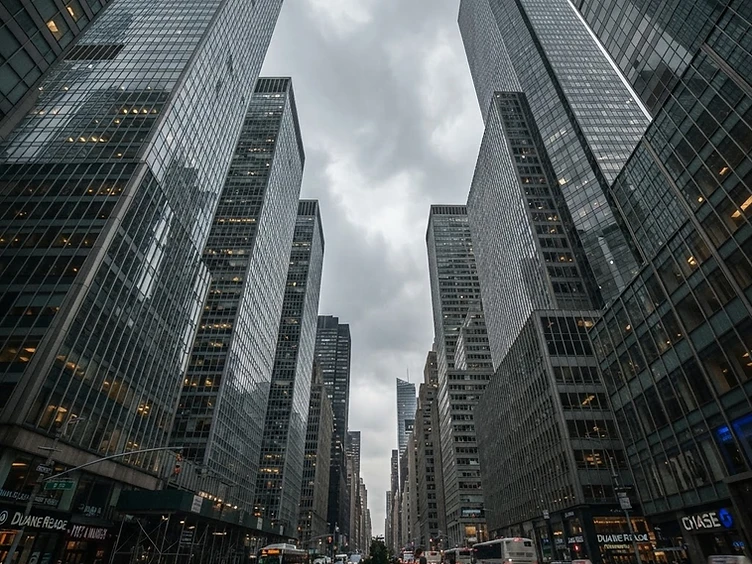
Manhattan — where our founder spent seven years at Kohn Pedersen Fox
01 — WHAT WE DO
What does nSCALE do in New York?
nSCALE provides architectural design, feasibility studies, and owner's representation in New York. Our founder's seven years at Kohn Pedersen Fox in Manhattan — working on large-scale commercial and infrastructure projects — means we can handle institutional-scale work that most small firms can't.
We navigate the NYC Building Code, the Zoning Resolution, ULURP, and the DOB filing process for clients who need a licensed architect who has done it before. Whether the project is a community facility in the Bronx or a mixed-use development in Brooklyn, we bring large-complex-project discipline to every engagement.
02 — APPROVALS
How does development approval work in New York?
The NYC Building Code
The NYC Building Code is based on the International Building Code with NYC-specific amendments. Construction documents must be filed with the Department of Buildings (DOB) by a Registered Filing Representative — a licensed architect or engineer. DOB offers two paths: full plan examination, where a DOB plan examiner reviews the drawings and issues objections, and Professional Certification (self-certification), where the filing representative certifies compliance and bypasses full review. Self-certification carries liability and is not available for all project types.
The NYC Zoning Resolution
The Zoning Resolution divides the city into residential (R), commercial (C), and manufacturing (M) districts, each with use, bulk, and parking regulations. It also includes special districts with customized rules — like the Special Hudson Yards District or the Special West Chelsea District. Understanding which rules apply to your site is the first step in any NYC project.
ULURP
ULURP — the Uniform Land Use Review Procedure — is required for discretionary actions: rezonings, special permits, city map changes, and large-scale modifications. ULURP involves the Department of City Planning, the Community Board, the Borough President, the City Planning Commission, and sometimes the City Council. It typically takes six to nine months.
Landmarks and inclusionary housing
The Landmarks Preservation Commission (LPC) reviews projects in historic districts and on landmarked sites — LPC must approve the design before DOB can issue a permit. Mandatory Inclusionary Housing (MIH) requires affordable housing in developments built under certain rezonings: in exchange for increased density, developers must set aside 20–30% of units as affordable, enforced through a permanent regulatory agreement with HPD.
Outside NYC
Outside New York City, the New York State Building Code applies, administered by local building departments. The approval process is generally simpler than in the city — no ULURP, no Zoning Resolution — but local zoning still applies, and the state code is still based on the IBC with New York amendments.
03 — FUNDING
What funding is available for community projects in New York?
HPD (Department of Housing Preservation and Development)
HPD is NYC's housing agency. It offers financing programs for affordable housing, including the Extremely Low & Low-Income Affordability (ELLA) program, the Supportive Housing Loan Program, and the Senior Affordable Rental Housing program. HPD programs combine city funds with federal LIHTC and tax-exempt bonds.
HDC (Housing Development Corporation)
HDC is NYC's financing arm. It issues tax-exempt and taxable bonds to finance affordable housing. HDC works alongside HPD — HPD provides subsidy, HDC provides the debt. Together they are the primary source of affordable housing financing in NYC.
NYS Homes and Community Renewal (HCR)
HCR is the state's housing agency. It administers the LIHTC program statewide, along with several other financing programs. HCR's programs are available both in NYC and upstate.
NYC Industrial Development Agency (NYCIDA)
The NYCIDA provides tax exemptions — including property tax, sales tax, and mortgage recording tax exemptions — for projects that meet job creation and investment thresholds. IDA benefits are negotiated through a payment-in-lieu-of-taxes (PILOT) agreement.
Federal programs
HUD's Community Development Block Grant (CDBG) and HOME programs provide funding for affordable housing and community development. In NYC, these are administered by HPD.
04 — PROJECTS
What has nSCALE built in New York?
nSCALE is actively expanding its New York portfolio. Current and completed projects in this state will appear here as they are published. To discuss a New York project, contact us.
05 — LICENSURE
Is nSCALE licensed in New York?
Yes. nSCALE is licensed in New York and has been active across the state. The firm can also become licensed in any other state as needed through NCARB reciprocity.
Christopher Pettis, NCARB, serves as the principal architect for all New York projects. His prior experience includes seven years at Kohn Pedersen Fox in Manhattan.
06 — FAQ
Common questions about development in New York
What is ULURP and when do I need it?
ULURP — the Uniform Land Use Review Procedure — is New York City's process for discretionary land use actions like rezonings, special permits, and city map changes. If your project complies with the existing zoning, you don't need ULURP. If you need a zoning change, a special permit, or a large-scale modification, you do. ULURP involves the Department of City Planning, the Community Board, the Borough President, the City Planning Commission, and sometimes the City Council. It typically takes six to nine months.
How does NYC Department of Buildings plan review work?
The NYC Department of Buildings (DOB) reviews construction documents for compliance with the NYC Building Code. An architect or engineer — a Registered Filing Representative — submits the drawings through the DOB's eFiling system. DOB assigns a plan examiner who reviews the documents and issues objections. The filing representative resolves the objections and resubmits. Alternatively, a Registered Filing Representative can self-certify compliance, which bypasses full plan examination but carries liability.
What is the NYC Zoning Resolution?
The NYC Zoning Resolution is the city's zoning code. It divides the city into residential, commercial, and manufacturing districts and regulates what can be built in each. It controls use (what activities are allowed), bulk (how big and how tall), and parking. It also includes special districts with customized rules, like the Special Hudson Yards District. Understanding which rules apply to your site is the first step in any NYC project.
What is Mandatory Inclusionary Housing?
Mandatory Inclusionary Housing (MIH) is a NYC program that requires affordable housing to be included in developments built under certain rezonings. When an area is rezoned to allow more density, developers must set aside a percentage of units as affordable — typically 20 to 30 percent — in exchange for the increased density. MIH applies in areas that have been rezoned through the city's neighborhood planning studies. The affordability requirements are permanent and enforced through a regulatory agreement with HPD.
How do I apply for HPD financing in New York?
The NYC Department of Housing Preservation and Development (HPD) offers financing programs for affordable housing, including the Extremely Low & Low-Income Affordability (ELLA) program and the Supportive Housing Loan Program. You submit an application during an open funding round, with a complete feasibility study, pro forma, and concept design. HPD evaluates projects based on affordability depth, financial feasibility, and team experience. nSCALE's Level 3 underwriting package is designed to meet HPD's submission requirements.
What is a special permit in NYC?
A special permit is a discretionary approval granted by the City Planning Commission or the Board of Standards and Appeals that allows a use or bulk modification not permitted as-of-right in the zoning district. Special permits are granted when the project meets specific findings in the Zoning Resolution — for example, that the use will not impair the neighborhood's character. Special permits go through ULURP and require a public hearing. They typically take six to twelve months.
How long does the NYC approval process take?
For an as-of-right project — one that complies with existing zoning — the DOB plan review process takes two to four months. For a project requiring a special permit or rezoning, the ULURP process adds six to nine months. Landmarks Preservation Commission review adds two to four months. A complex project with multiple discretionary approvals can take a year or more before construction starts. nSCALE's founder spent seven years at Kohn Pedersen Fox managing exactly this kind of complex approval process.
Does nSCALE work outside New York City?
Yes. nSCALE's New York license covers the entire state. While our primary New York experience is in Manhattan — where our founder worked at Kohn Pedersen Fox — we can work in any jurisdiction in New York State. Outside NYC, the New York State Building Code applies, administered by local building departments. The approval process is generally simpler than in the city, but local zoning still applies. We can help you understand the requirements in your specific jurisdiction.